🇬🇧 Read this letter in English ↓
Signor Primo Ministro incaricato,
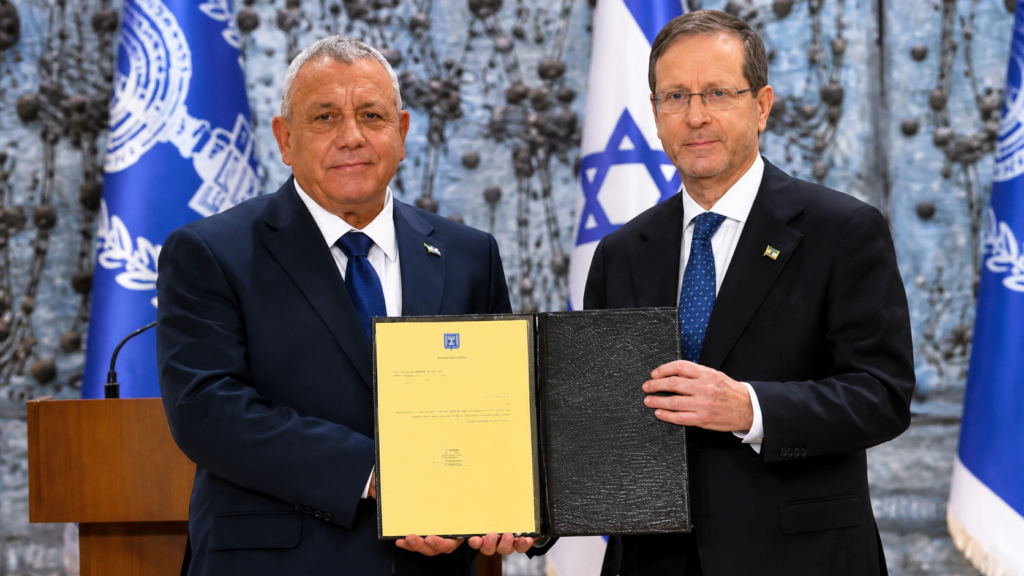
il 4 novembre di trentuno anni fa, in una piazza di Tel Aviv, un estremista israeliano uccise Yitzhak Rabin. Quattro giorni dopo l’anniversario, il presidente Herzog ha consegnato a lei il mandato di formare il nuovo governo, chiedendole di fare tutto ciò che è in suo potere per dare a Israele un esecutivo che serva l’intero popolo. Non credo alle coincidenze del calendario, ma credo alle lezioni della storia. E questa le parla direttamente: anche Rabin era un generale, e anche lui aveva usato la forza prima di scegliere la mano tesa. E fu ucciso non da un nemico esterno, ma da un figlio del suo stesso Paese.
Le scrivo da amico di Israele che non confonde l’amicizia con l’applauso. Il governo che lei si prepara a guidare, se entro i ventotto giorni previsti dalla legge riuscirà a trovare i sessantuno seggi necessari, eredita un panorama drammatico: la ferita mai rimarginata del 7 ottobre, con i suoi milleduecento morti; una Striscia di Gaza ridotta in macerie, con decine di migliaia di vittime e un popolo di sfollati; una guerra con l’Iran che ancora non si è chiusa; un estremismo interno che, dalle colline della Cisgiordania alle aule della Knesset, ha messo in discussione lo stesso Stato di diritto. E sullo sfondo, alla Casa Bianca, un alleato tanto potente quanto imprevedibile.
Per anni la politica dello scontro frontale ha isolato Israele all’estero e lo ha spaccato all’interno, dissipando un patrimonio di simpatia e di solidarietà che sembrava inesauribile. Per questo la sfida più grande del suo governo non sarà soltanto garantire la sicurezza o ricostruire la credibilità diplomatica del Paese. Sarà ricucire una società lacerata. Un Israele diviso non può essere un Israele sicuro, né credibile agli occhi del mondo.
Ciò che lei sa meglio di me
Lei conosce il prezzo della guerra come pochi. Lo conosce da soldato, da capo di Stato maggiore, da ministro nei mesi più duri del conflitto. E lo conosce, purtroppo, da padre: suo figlio Gal è caduto a Gaza il 7 dicembre 2023, e la stessa guerra le ha portato via anche due nipoti. Non ho alcun titolo per parlare di quel dolore, ed è proprio per questo che le sue parole sulla pace, se verranno, peseranno più di quelle di chiunque altro.
Non le scrivo da ammiratore ingenuo. So che il suo nome è legato anche alla «dottrina Dahiya», la teoria della forza sproporzionata che lei stesso formulò nel 2008, da comandante del fronte nord, prendendo a modello la distruzione del quartiere Dahiya di Beirut durante la guerra del 2006. Ma proprio questo rende la sua posizione unica. Chi ha teorizzato la forza ne conosce anche i limiti. E sa ciò che ogni generale, prima o poi, impara: in ogni guerra arriva il momento in cui le armi devono cedere il passo alla politica, e la vera forza si misura nella capacità di costruire la pace.
È la strada che percorse Rabin. Il ministro della Difesa che durante la prima Intifada aveva scelto il pugno di ferro fu lo stesso uomo che pochi anni dopo strinse la mano ad Arafat. Non smise di essere un soldato: capì che la sicurezza senza politica è soltanto una guerra rimandata.
Cinque scelte, non cinque slogan
Raccogliere quel testimone, oggi, significa compiere cinque scelte precise.
Governare per tutti, non contro qualcuno. Lei ha promesso un «governo di emergenza nazionale», anche a costo di iniziative «creative e non convenzionali». Le serviranno davvero. Un cittadino israeliano su cinque è arabo, ed entrambi i partiti arabi, Ra’am e la Lista Comune, hanno raccomandato il suo nome al presidente. Quella fiducia non va trattata come un voto da contare in silenzio e poi dimenticare: va trasformata in cittadinanza piena.
Tornare alla Dichiarazione d’Indipendenza. Lei stesso ha posto come condizione per ogni alleanza di governo il rispetto dei valori di quella Dichiarazione. Quel testo, firmato nel 1948, promette la «completa uguaglianza dei diritti sociali e politici a tutti gli abitanti, senza distinzione di religione, razza o sesso». Prenderlo sul serio significa applicare la legge anche a chi, in Cisgiordania, la calpesta in nome di Dio o della terra. Lo Stato che tollera la violenza dei propri estremisti finisce, prima o poi, per esserne ostaggio. Rabin ne ha pagato il prezzo con la vita.
Dire la verità, sul 7 ottobre e su Gaza. Lei ha promesso una commissione d’inchiesta statale sulle falle che resero possibile il massacro, quella che il governo uscente ha rifiutato per tre anni, e il suo schieramento vuole farla nascere per legge già nella nuova Knesset. Le chiedo di mantenere la promessa, e di darle la piena indipendenza che ebbe la commissione Agranat dopo la guerra del Kippur.
Ma le chiedo anche di avere lo stesso coraggio su Gaza. Una parte crescente del mondo usa per la Striscia la parola più grave del diritto internazionale: genocidio. È l’accusa che il Sudafrica ha portato davanti alla Corte internazionale di giustizia, in un procedimento che durerà almeno fino al 2029. La Corte penale internazionale, dal canto suo, ha emesso nel 2024 un mandato d’arresto contro Benjamin Netanyahu per crimini di guerra e crimini contro l’umanità. Israele respinge queste accuse. Ma un’accusa così non si respinge con l’indignazione: si respinge con la verità. Lei stesso, sotto le pressioni della destra, ha difeso un’indagine militare in nome della disciplina e dell’etica dell’esercito. Faccia lo stesso per Gaza, con un’inchiesta indipendente su ciò che è stato fatto e su chi ne porta la responsabilità. La verità non è un regalo ai nemici di Israele: è l’unica difesa del buon nome del Paese.
Dare a Gaza un domani, e ai palestinesi un orizzonte. La ricostruzione della Striscia, l’accesso pieno agli aiuti, il ritorno di una vita civile non sono concessioni al nemico: sono la condizione perché il prossimo 7 ottobre non trovi terreno fertile. E nessuna sicurezza durerà senza una prospettiva politica per il popolo palestinese. So che oggi lei considera un’illusione la soluzione dei due Stati. Ma prima di entrare in politica era proprio lei ad avvertire che il controllo permanente sui palestinesi della Cisgiordania rischiava di portare a uno Stato binazionale, cioè, parole sue, alla «fine della visione sionista». Quell’avvertimento resta vero, e attende ancora una risposta. È la lezione più scomoda di Rabin, ed è per questo la più necessaria.
Trattare Washington da alleato, non da padrone. Israele ha bisogno degli Stati Uniti, ma ha bisogno anche dell’Europa e del mondo arabo moderato. Un governo che difende gli interessi vitali del Paese senza farsi trascinare nelle polarizzazioni altrui sarà un governo più rispettato, a Washington come altrove.
Il coraggio di Rabin
Il mondo e i cittadini di Israele guarderanno alle sue scelte. Lei ha meno di un mese per formare un governo, e poi qualche anno per dimostrare che la storia può cambiare direzione. Le auguro il coraggio che ebbe Rabin, e la fortuna che a lui fu negata: quella di vedere la pace che avrà saputo costruire.
D.V.
An Open Letter to Gadi Eisenkot, Prime Minister-designate of the State of Israel
Dear Prime Minister-designate,
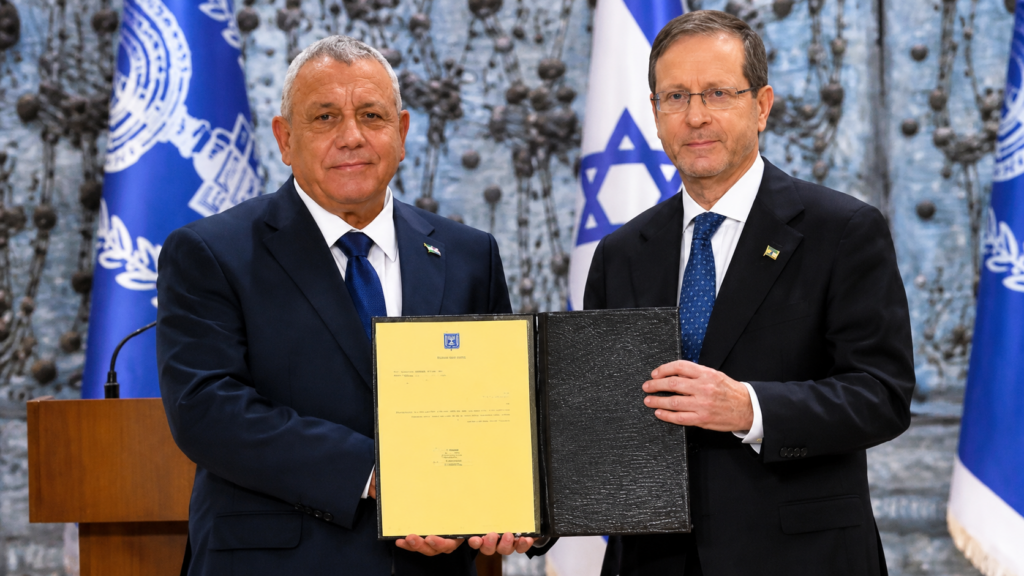
On 4 November, thirty-one years ago, in a square in Tel Aviv, an Israeli extremist murdered Yitzhak Rabin. Four days after the anniversary, President Herzog handed you the mandate to form the next government, asking you to do everything in your power to give Israel a government that serves the entire people. I do not believe in coincidences of the calendar, but I do believe in the lessons of history. And this one speaks to you directly. Rabin, too, was a general, and he, too, had used force before choosing the outstretched hand. And he was killed not by a foreign enemy, but by a son of his own country.
I write to you as a friend of Israel who does not mistake friendship for applause. The government you are preparing to lead, if within the twenty-eight days allowed by law you can find the sixty-one seats you need, inherits a grim landscape: the unhealed wound of 7 October and its twelve hundred dead; a Gaza Strip reduced to rubble, with tens of thousands of victims and a people of displaced; a war with Iran that has not yet ended; and a domestic extremism that, from the hills of the West Bank to the benches of the Knesset, has called the rule of law itself into question. And in the background, in the White House, an ally as powerful as he is unpredictable.
For years, the politics of confrontation has isolated Israel abroad and split it at home, squandering a reserve of sympathy and solidarity that once seemed inexhaustible. That is why the greatest challenge facing your government will not only be to guarantee security or to rebuild the country’s diplomatic credibility. It will be to heal a torn society. A divided Israel cannot be a secure Israel, nor a credible one in the eyes of the world.
What you know better than I do
You know the price of war as few people do. You know it as a soldier, as chief of staff, as a minister in the hardest months of the conflict. And you know it, tragically, as a father: your son Gal fell in Gaza on 7 December 2023, and the same war has also taken two of your nephews. I have no standing to speak of that grief, and that is precisely why your words about peace, if they come, will carry more weight than anyone else’s.
I do not write as a naïve admirer. I know your name is also tied to the “Dahiya doctrine”, the theory of disproportionate force that you yourself set out in 2008, as head of Northern Command, taking as its model the destruction of Beirut’s Dahiya quarter in the 2006 war. But that is exactly what makes your position unique. Whoever has theorised force also knows its limits. And knows what every general learns sooner or later: in every war there comes a moment when weapons must give way to politics, and when true strength is measured by the ability to build peace.
That was the road Rabin travelled. The defence minister who chose the iron fist during the first Intifada was the same man who, a few years later, shook Arafat’s hand. He never stopped being a soldier. He simply understood that security without politics is only a war postponed.
Five choices, not five slogans
To take up that legacy today means making five clear choices.
Govern for everyone, not against someone. You have promised a “national emergency government”, even if it requires “creative and unconventional” steps. You will need every bit of that creativity. One Israeli citizen in five is Arab, and both Arab parties, Ra’am and the Joint List, recommended you to the President. That trust must not be treated as a vote to be counted in silence and then forgotten. It must be turned into full citizenship.
Return to the Declaration of Independence. You yourself have made respect for its values a condition for any coalition partner. That text, signed in 1948, promises “complete equality of social and political rights to all its inhabitants irrespective of religion, race or sex”. To take it seriously means enforcing the law also against those who, in the West Bank, trample it in the name of God or of the land. A state that tolerates the violence of its own extremists sooner or later becomes their hostage. Rabin paid that price with his life.
Tell the truth, about 7 October and about Gaza. You have promised a state commission of inquiry into the failures that made the massacre possible, the very inquiry the outgoing government refused for three years, and your camp wants to establish it by law in the new Knesset. I ask you to keep that promise, and to give the commission the full independence the Agranat Commission had after the Yom Kippur War.
But I also ask you to show the same courage on Gaza. A growing part of the world uses for the Strip the gravest word in international law: genocide. It is the charge South Africa has brought before the International Court of Justice, in proceedings that will run until at least 2029. The International Criminal Court, for its part, issued an arrest warrant in 2024 for Benjamin Netanyahu on charges of war crimes and crimes against humanity. Israel rejects these accusations. But an accusation of that kind is not answered with indignation. It is answered with the truth. You yourself, under pressure from the right, defended a military investigation in the name of the army’s discipline and ethics. Do the same for Gaza, with an independent inquiry into what was done and who bears responsibility. The truth is not a gift to Israel’s enemies. It is the only defence of the country’s good name.
Give Gaza a future, and the Palestinians a horizon. Rebuilding the Strip, full access for aid and the return of civilian life are not concessions to the enemy. They are the condition for ensuring that the next 7 October finds no fertile ground. And no security will last without a political horizon for the Palestinian people. I know that today you regard the two-state solution as an illusion. But before you entered politics, it was you who warned that permanent control over the Palestinians of the West Bank risked leading to a binational state, which you called, in your own words, “the end of the Zionist vision”. That warning still holds, and it is still waiting for an answer. It is Rabin’s most uncomfortable lesson, and for that very reason his most necessary one.
Treat Washington as an ally, not a master. Israel needs the United States, but it also needs Europe and the moderate Arab world. A government that defends the country’s vital interests without being dragged into other people’s polarisation will be a more respected government, in Washington and everywhere else.
Rabin’s courage
The world and the citizens of Israel will be watching your choices. You have less than a month to form a government, and then a few years to prove that history can change direction. I wish you the courage Rabin had, and the good fortune he was denied: to live to see the peace you will have managed to build.
D.V.
🇮🇹 Torna alla versione italiana ↑
About The Author