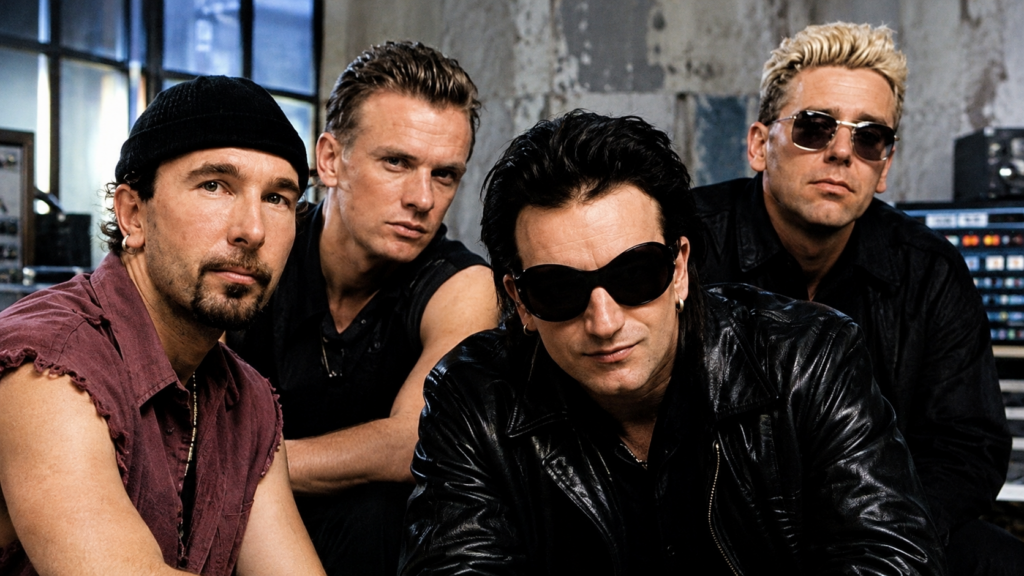
Trentacinque anni fa, il 18 novembre 1991, usciva Achtung Baby: dodici canzoni nate a Berlino, tra un Muro appena caduto e una band a un passo dallo scioglimento. Un’opera d’insieme che resta la vetta degli irlandesi, e che perfino il loro nuovo disco, uscito pochi giorni fa, è costretto a guardare dal basso.
Una colonna sonora per il futuro
Oggi sono trentacinque anni. Il 18 novembre 1991 arrivava nei negozi Achtung Baby, settimo album in studio degli U2. Per me è e resta il loro disco migliore: per l’invenzione musicale, per lo stile, per i testi, per la qualità dei singoli brani e, soprattutto, per la tenuta dell’insieme. Ogni brano ha lasciato delle parole, delle frasi, che è impossibile dimenticare…
Gli U2 li avevo conosciuti con The Joshua Tree. Da lì ero andato a ritroso, un album dopo l’altro, a cercare le origini: la rabbia graffiante degli esordi, la chitarra tagliente di Boy, il grido politico di War e della sua traccia regina, ovvero Sunday Bloody Sunday. Poi arrivò Achtung Baby, e mi trovò adolescente, affamato di una musica che accompagnasse la quotidianità, il tempo che scorreva verso un futuro ancora tutto da scrivere. E c’era un amico, in quegli anni, con cui cercavo di ascoltare, capire e comprendere davvero quei quattro ragazzi irlandesi. Forse è per questo che quel disco non l’ho mai archiviato. Ma non è solo nostalgia, e provo a spiegare perché.
Sognare tutto di nuovo
Alla fine degli anni Ottanta gli U2 avevano conquistato il mondo e stavano per perderlo. Rattle and Hum, il film e il disco del 1988, era stato accolto come un pellegrinaggio pomposo nelle radici della musica americana: blues, gospel, Elvis e B.B. King, con quattro irlandesi che si mettevano in posa accanto ai giganti. La critica li aveva bollati come predicatori presuntuosi. Bono, sul palco di Dublino alla fine del 1989, lo ammise davanti al pubblico: la band doveva andarsene e sognare tutto di nuovo.
Lo fecero nel luogo più simbolico possibile. Nell’ottobre del 1990 sbarcarono a Berlino, alla vigilia della riunificazione tedesca, negli Hansa Studios, a due passi dal Muro, dove David Bowie aveva inciso “Heroes”. Speravano di respirare l’aria della nuova Europa. Trovarono una città grigia e sospesa, e trovarono soprattutto se stessi in pezzi. Bono e The Edge volevano l’elettronica, i ritmi da club, la sporcizia industriale che arrivava da Manchester e dalla scena tedesca. Adam Clayton e Larry Mullen Jr. si sentivano estranei al loro stesso gruppo. Larry, anni dopo, avrebbe confessato di aver pensato che fosse la fine.
Li salvò una canzone, e ci arriveremo. Il lavoro proseguì poi a Dublino, tra i Windmill Lane Studios e una casa sul mare a Dalkey, con Daniel Lanois e Brian Eno in regia, Flood al banco e Steve Lillywhite al missaggio di alcuni brani. Bono riassunse il risultato con una formula rimasta celebre: il rumore di quattro uomini che abbattono il Joshua Tree. Persino la copertina, il collage di Anton Corbijn con le Trabant dipinte, le luci al neon e i colori sgargianti, annunciava che quella band in bianco e nero, seria e desertica, non esisteva più.
Dodici stazioni, una per una
1. Zoo Station
Il titolo viene dalla stazione Zoologischer Garten di Berlino, e la prima nota è uno strappo: una chitarra distorta che sembra un guasto, la voce di Bono filtrata come da un megafono rotto. Chi aveva in testa le distese di The Joshua Tree pensò, per un attimo, di aver sbagliato disco. Era proprio l’effetto voluto. È una dichiarazione d’intenti travestita da canzone: un uomo che si prepara a un viaggio di cui non conosce la destinazione, e la band che lo segue nel buio. Cos’ha lasciato in me? Facile! “Time is a train, makes the future the past. Leaves you standing in the station, your face pressed up against the glass”.
2. Even Better Than the Real Thing
Un riff glam, sfacciato, con il pedale Whammy di The Edge che fa scivolare la chitarra verso l’alto come una sirena. Sotto la superficie da pista da ballo c’è il tema che percorrerà tutta l’era di Zoo TV: il confine tra vero e falso, tra desiderio e imitazione, in un mondo che stava per affogare negli schermi. Gli U2 che avevano sempre giurato sull’autenticità cominciano a giocare con l’artificio. E lo fanno con un pezzo che, ancora oggi, è un’iniezione di energia. Quando l’ascolto, mi soffermo sul punto in cui “You’re honey, child, to a swarm of bees, gonna blow right through you like a breeze. Give me one last dance, we’ll slide down the surface of things”.
3. One
È la canzone che, per loro stessa ammissione, salvò gli U2. Durante una sessione disperata a Berlino, mentre la band si arenava su un brano provvisoriamente chiamato Sick Puppy, The Edge provò due giri di accordi pensati per un ponte. Lanois gli suggerì di suonarli uno dopo l’altro. In un quarto d’ora la struttura era lì, con Bono che improvvisava le parole. Il paradosso è che One, cantata ai matrimoni di mezzo mondo, parla di una separazione: è un dialogo amaro tra due persone che si sono ferite e che non riescono né a stare insieme né a lasciarsi. Una storia d’amore, una band sull’orlo della rottura, una Germania che si riunisce: ognuno ci ha letto la propria. Uscita come singolo nel febbraio 1992, devolse i proventi alla ricerca contro l’AIDS. È, probabilmente, la canzone più bella che abbiano mai scritto. Specie se penso a “Did I disappoint you or leave a bad taste in your mouth? You act like you never had love and you want me to go without”.
4. Until the End of the World
Nata per l’omonimo film di Wim Wenders, è il brano in cui Bono osa di più sul piano dei testi: a parlare è Giuda, che ripercorre l’Ultima cena, il bacio nell’orto e il rimorso. La chitarra di The Edge è un vortice, la sezione ritmica spinge come un treno. Il tradimento, la colpa, l’amore che si fa veleno: è il cuore teologico di un disco che finge di essere frivolo e invece non smette mai di interrogarsi su Dio. Non so perché, ma la mia voce si sofferma ancora a canticchiare “In my dream, I was drowning my sorrows. But my sorrows they’d learned to swim. Surrounding me, going down on me. Spilling over the brim”.
5. Who’s Gonna Ride Your Wild Horses
La ballata più classica del lotto, quella che più somiglia agli U2 di prima. Racconta un amore che consuma, una donna indomabile e un uomo che non sa se fuggire o restare. È anche il brano su cui la band ebbe più dubbi: per il singolo ne pubblicò una versione rimaneggiata, segno di un’insoddisfazione mai del tutto risolta. Eppure, nella sua imperfezione, è uno dei momenti più sinceri del disco. Ancora oggi tremo al suo inizio, quando “You’re dangerous, ‘cos you’re honest. You’re dangerous, you don’t know what you want. Well you left my heart empty as a vacant lot, for any spirit to haunt”.
6. So Cruel
Scritta da Bono al pianoforte, è una canzone sulla gelosia e sull’ossessione, sull’amore che diventa possesso e dipendenza. L’arrangiamento è spoglio, quasi cameristico, e lascia la voce nuda. Qui Achtung Baby mostra la sua natura più profonda: non un disco sulla Berlino della riunificazione, come la band aveva immaginato, ma un disco sulle relazioni che si sfasciano. La virtù di questo brano credo sia in poche semplici parole… “Desperation is a tender trap. It gets you everytime. You put your lips to her lips to stop the lie”.
7. The Fly
Fu il primo singolo, nell’ottobre del 1991, e spiazzò tutti: un rock industriale e cattivo, la voce di Bono sdoppiata tra un falsetto lancinante e un sussurro basso, quasi demoniaco. Arrivò in vetta alla classifica britannica. Da questa canzone nacque il personaggio con gli occhialoni neri e il giubbotto di pelle che Bono avrebbe portato in scena nello Zoo TV Tour: una rockstar egocentrica e ironica, la caricatura di ciò che i critici gli rimproveravano. Fu la mossa più intelligente della sua carriera: per difendersi dall’accusa di prendersi troppo sul serio, iniziò a recitare. La verità di questa canzone sta tutta qui: “It’s no secret that a liar won’t believe anyone else. They say a secret is something you tell one other person, so I’m telling you, child”.
8. Mysterious Ways
Il basso di Adam Clayton, finalmente protagonista, il wah-wah di The Edge, un groove che strizza l’occhio alla scena di Manchester. È il brano più ballabile degli U2, e anche uno dei più spirituali: il mistero femminile e quello divino si confondono, fino a non distinguersi. Il video fu girato in Marocco, e nei concerti la canzone era accompagnata da una danzatrice del ventre, Morleigh Steinberg, che anni dopo sarebbe diventata la moglie di The Edge. Sono certo di aver consumato la parte della traccia in cui Bono canta “One day you’ll look back, and you’ll see where you were held now by this love, while you could stand there. You could move on this moment, follow this feeling”.
9. Tryin’ to Throw Your Arms Around the World
Un uomo che rincasa all’alba dopo una notte di eccessi, ubriaco e tenero, con l’ambizione smisurata di chi, a quell’ora, si sente capace di abbracciare il pianeta. È il momento più leggero del disco, quasi una ninna nanna, ed è il respiro necessario prima della discesa finale. La strofa che mi faceva sorridere tornando a casa la sera era “Nothing much to say, I guess; just the same as all the rest. Been tryin’ to throw your arms round the world. And a woman needs a man like a fish needs a bicycle, when you’re tryin’ to throw your arms around the world”.
10. Ultraviolet (Light My Way)
Inizia sommessa, poi si apre in una delle invocazioni più accorate di Bono: una richiesta di luce, rivolta a una donna o forse a Dio, da parte di chi si sente al buio. È il punto di equilibrio tra gli U2 epici degli anni Ottanta e quelli nuovi, frammentati e notturni. Dal vivo, nello Zoo TV, era uno dei momenti più intensi dello spettacolo. Non so spiegarmi perché, o forse lo so e non voglio ammetterlo, ma per me è tutto in quel verso: “When I was all messed up and I heard opera in my head, your love was a light bulb hanging over my bed”.
11. Acrobat
Il brano più cupo e meno conosciuto, ed è forse il mio preferito tra i gioielli nascosti. Parla di doppiezza, di sfiducia in se stessi, della fatica di essere coerenti con ciò che si predica; c’è perfino un rimando a uno scrittore come Delmore Schwartz. È talmente scomodo che la band non lo suonò dal vivo per oltre un quarto di secolo: la prima esecuzione arrivò soltanto nel 2018. Perché dopo tutto, si sa, “don’t let the bastards grind you down”.
12. Love Is Blindness
La chiusura è un organo funereo, una voce stanca e un assolo di The Edge che sembra strappato al corpo. Lui stesso ha raccontato di averlo registrato mentre il suo matrimonio andava in pezzi. Non c’è catarsi, non c’è redenzione: c’è l’amore come cecità, che acceca e non salva. Dopo cinquanta minuti di neon e ironia, il disco si spegne nel buio più sincero. È il finale perfetto di un’opera che, per la prima volta, non aveva paura di non consolare. Un finale che suona come “A little death without mourning. No call and no warning. Baby, a dangerous idea that almost makes sense”.
Un disco, non una raccolta di singoli
Ecco il punto. Achtung Baby non è grande per le hit, che pure ci sono: The Fly, Mysterious Ways, One, Even Better Than the Real Thing, Who’s Gonna Ride Your Wild Horses. È grande perché è un’opera d’insieme, un ciclo di canzoni sull’amore che si rompe, sul tradimento, sulla fede che vacilla, sull’identità che si moltiplica davanti agli schermi. Ogni brano sta in piedi da solo, ma ognuno ha bisogno degli altri per dire tutto. Diciotto milioni di copie vendute, un Grammy nel 1993, il tour più visionario della storia del rock: lo Zoo TV, con i suoi muri di televisori, le telefonate in diretta, Bono travestito da rockstar, da diavolo, da se stesso.
E lo sanno anche loro. Quando nel 2023 hanno inaugurato la Sphere di Las Vegas, la sala più avveniristica del mondo, non hanno scelto The Joshua Tree. Hanno scelto di suonare Achtung Baby dall’inizio alla fine. Trentadue anni dopo, il disco che rappresentava il loro futuro era ancora quello.
Dopo Berlino
Da allora gli U2 hanno pubblicato molto, e non tutto è da buttare. Zooropa, nel 1993, fu il fratello minore e sperimentale di Achtung Baby, nato quasi per inerzia durante il tour. Pop, nel 1997, era un disco coraggioso, incompreso e rimasto a metà. Poi la virata: All That You Can’t Leave Behind nel 2000 e How to Dismantle an Atomic Bomb nel 2004 riportarono la band nel porto sicuro del suono classico, con canzoni bellissime come Beautiful Day, Walk On e Vertigo, e una pioggia di premi, compreso il Grammy come album dell’anno. Ma erano, appunto, ottime canzoni. Non un’opera.
Il resto è la cronaca di un declino lento. No Line on the Horizon, nel 2009, riprovò l’avventura con Eno e Lanois senza trovare la stessa urgenza. Songs of Innocence, nel 2014, è ricordato più per essere stato infilato d’ufficio in mezzo miliardo di account iTunes che per le sue canzoni. Songs of Experience, nel 2017, ne fu il completamento senza scosse. E Songs of Surrender, nel 2023, è un monumento alla propria memoria: quaranta vecchi brani rifatti in chiave acustica. Una band che si guarda allo specchio.
Quest’anno, per i cinquant’anni dalla nascita, gli U2 hanno cambiato marcia: due EP a sorpresa, Days of Ash ed Easter Lily, e il 13 novembre il nuovo album di inediti, Carnaval De Luz, il primo dopo nove anni, con Larry Mullen Jr. di nuovo alla batteria. Dodici brani, come allora. La critica lo ha accolto con calore, e alcune recensioni lo hanno definito il loro lavoro migliore da oltre trent’anni. Bisognerà ascoltarlo con il tempo che merita. Ma il dato più eloquente è proprio questo: il complimento più alto che si possa fare a un disco degli U2, nel 2026, è ancora dire che ricorda Achtung Baby. Trentacinque anni dopo, il metro di misura è sempre lo stesso.
Abbattere per ricostruire
C’è una lezione, in Achtung Baby, che va oltre la musica. Gli U2 erano la band più grande del mondo, avevano la formula e il pubblico. Avrebbero potuto replicarsi all’infinito. Scelsero invece di demolire ciò che li aveva resi celebri, a rischio di perdere tutto, perfino se stessi. Abbatterono il loro albero per vedere che cosa sarebbe cresciuto al suo posto. È raro, nell’arte come nella vita, trovare il coraggio di rinnegare il proprio successo per restare vivi.
Per questo, trentacinque anni dopo, quel ragazzo che cercava una colonna sonora per il suo futuro rimette ancora il disco dall’inizio. E aspetta, come la prima volta, lo strappo di chitarra di Zoo Station.
D.V.
🇬🇧 English version
The Day U2 Cut Down Their Own Tree
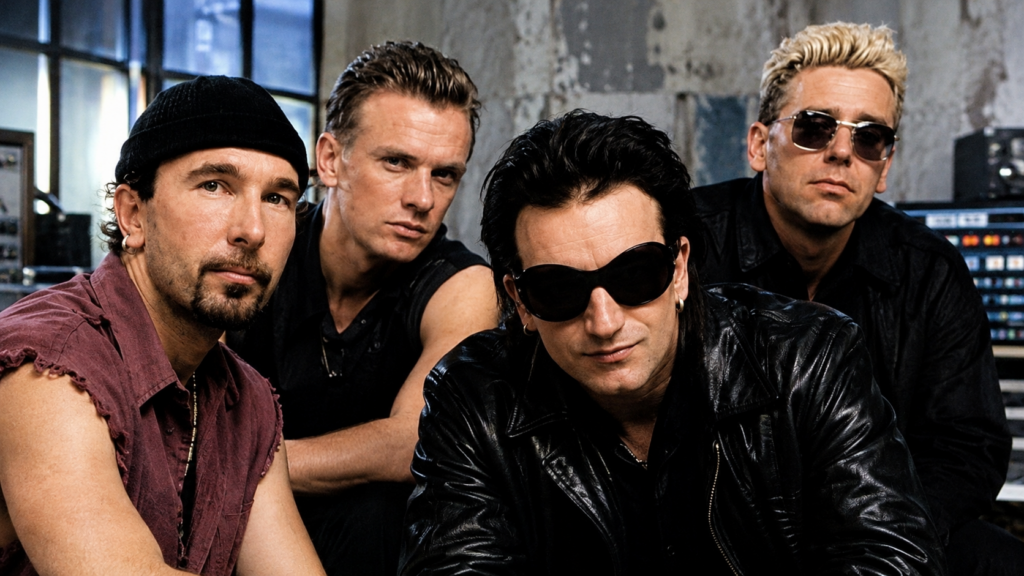
Thirty-five years ago, on 18 November 1991, Achtung Baby was released: twelve songs born in Berlin, between a Wall that had just fallen and a band on the verge of breaking up. A complete body of work that remains the Irish band’s summit, and one that even their new record, released just a few days ago, has to look up to.
A soundtrack for the future
Today it is thirty-five years. On 18 November 1991, Achtung Baby, U2’s seventh studio album, arrived in record shops. For me it is, and remains, their finest record: for its musical invention, its style, its lyrics, the quality of each song and, above all, the way it holds together as a whole. Every track has left behind words, lines, that are impossible to forget…
I had discovered U2 with The Joshua Tree. From there I worked my way backwards, one album after another, in search of their roots: the raw anger of their early days, the cutting guitar of Boy, the political cry of War and its crowning track, Sunday Bloody Sunday. Then came Achtung Baby, and it found me as a teenager, hungry for music to go with my everyday life, with the time flowing towards a future still waiting to be written. And there was a friend, in those years, with whom I tried to listen to, understand and truly grasp those four Irish lads. Perhaps that is why I have never filed that record away. But it is not just nostalgia, and I will try to explain why.
Dreaming it all up again
By the end of the 1980s, U2 had conquered the world and were about to lose it. Rattle and Hum, the 1988 film and album, had been received as a pompous pilgrimage to the roots of American music: blues, gospel, Elvis and B.B. King, with four Irishmen posing alongside the giants. Critics had branded them as self-important preachers. Bono, on stage in Dublin at the end of 1989, admitted as much to the audience: the band had to go away and dream it all up again.
They did so in the most symbolic place imaginable. In October 1990 they landed in Berlin, on the eve of German reunification, at Hansa Studios, a stone’s throw from the Wall, where David Bowie had recorded “Heroes”. They hoped to breathe the air of the new Europe. What they found was a grey, suspended city, and above all they found themselves in pieces. Bono and The Edge wanted electronics, club rhythms, the industrial grime coming out of Manchester and the German scene. Adam Clayton and Larry Mullen Jr. felt like strangers in their own band. Years later, Larry would confess that he thought it was the end.
A song saved them, and we will get to it. Work then continued in Dublin, between Windmill Lane Studios and a house by the sea in Dalkey, with Daniel Lanois and Brian Eno producing, Flood at the desk and Steve Lillywhite mixing some of the tracks. Bono summed up the result in a famous phrase: the sound of four men chopping down the Joshua Tree. Even the cover, Anton Corbijn’s collage of painted Trabants, neon lights and garish colours, announced that the black-and-white band, serious and desert-bound, no longer existed.
Twelve stations, one by one
1. Zoo Station
The title comes from Berlin’s Zoologischer Garten station, and the first note is a jolt: a distorted guitar that sounds like a malfunction, Bono’s voice filtered as if through a broken megaphone. Anyone with the open spaces of The Joshua Tree still in their head thought, for a moment, they had put on the wrong record. That was exactly the point. It is a statement of intent disguised as a song: a man preparing for a journey whose destination he does not know, and the band following him into the dark. What did it leave in me? Easy! “Time is a train, makes the future the past. Leaves you standing in the station, your face pressed up against the glass”.
2. Even Better Than the Real Thing
A brazen glam riff, with The Edge’s Whammy pedal sending the guitar sliding upwards like a siren. Beneath its dance-floor surface lies the theme that would run through the whole Zoo TV era: the line between real and fake, between desire and imitation, in a world about to drown in screens. The U2 who had always sworn by authenticity begin to play with artifice. And they do it with a track that, to this day, is a shot of pure energy. When I listen to it, I linger on the moment when “You’re honey, child, to a swarm of bees, gonna blow right through you like a breeze. Give me one last dance, we’ll slide down the surface of things”.
3. One
By their own admission, this is the song that saved U2. During a desperate session in Berlin, while the band was stuck on a track provisionally called Sick Puppy, The Edge tried out two chord progressions meant for a bridge. Lanois suggested he play them one after the other. Within fifteen minutes the structure was there, with Bono improvising the words. The paradox is that One, sung at weddings all over the world, is about a separation: a bitter dialogue between two people who have hurt each other and can neither stay together nor let go. A love story, a band on the brink of splitting, a Germany reuniting: everyone has read their own story into it. Released as a single in February 1992, it donated its proceeds to AIDS research. It is probably the most beautiful song they have ever written. Especially when I think of “Did I disappoint you or leave a bad taste in your mouth? You act like you never had love and you want me to go without”.
4. Until the End of the World
Written for Wim Wenders’ film of the same name, this is the track where Bono takes the greatest risks as a lyricist: the speaker is Judas, looking back on the Last Supper, the kiss in the garden and his remorse. The Edge’s guitar is a whirlwind, the rhythm section drives on like a train. Betrayal, guilt, love turned to poison: this is the theological heart of a record that pretends to be frivolous and yet never stops questioning God. I don’t know why, but my voice still catches itself humming “In my dream, I was drowning my sorrows. But my sorrows they’d learned to swim. Surrounding me, going down on me. Spilling over the brim”.
5. Who’s Gonna Ride Your Wild Horses
The most classic ballad of the set, the one that most resembles the U2 of old. It tells of a consuming love, an untameable woman and a man who does not know whether to run or stay. It is also the track the band had the most doubts about: for the single they released a reworked version, a sign of a dissatisfaction never fully resolved. And yet, in its imperfection, it is one of the most sincere moments on the record. To this day I tremble at its opening, when “You’re dangerous, ‘cos you’re honest. You’re dangerous, you don’t know what you want. Well you left my heart empty as a vacant lot, for any spirit to haunt”.
6. So Cruel
Written by Bono at the piano, it is a song about jealousy and obsession, about love turning into possession and dependence. The arrangement is sparse, almost chamber-like, and leaves the voice exposed. This is where Achtung Baby reveals its deepest nature: not a record about reunified Berlin, as the band had imagined, but a record about relationships falling apart. The virtue of this song, I think, lies in a few simple words… “Desperation is a tender trap. It gets you everytime. You put your lips to her lips to stop the lie”.
7. The Fly
It was the first single, in October 1991, and it wrong-footed everyone: a mean, industrial rock track, with Bono’s voice split between a piercing falsetto and a low, almost demonic whisper. It went to number one in the UK. This song gave birth to the character with the big black shades and leather jacket that Bono would bring to the stage on the Zoo TV Tour: an egotistical, ironic rock star, a caricature of everything the critics accused him of. It was the smartest move of his career: to defend himself against the charge of taking himself too seriously, he began to act. The truth of this song lies right here: “It’s no secret that a liar won’t believe anyone else. They say a secret is something you tell one other person, so I’m telling you, child”.
8. Mysterious Ways
Adam Clayton’s bass, finally centre stage, The Edge’s wah-wah, a groove with a wink to the Manchester scene. It is U2’s most danceable track, and also one of their most spiritual: the feminine mystery and the divine one blur until they are indistinguishable. The video was shot in Morocco, and in concert the song was accompanied by a belly dancer, Morleigh Steinberg, who years later would become The Edge’s wife. I am sure I wore out the part of the track where Bono sings “One day you’ll look back, and you’ll see where you were held now by this love, while you could stand there. You could move on this moment, follow this feeling”.
9. Tryin’ to Throw Your Arms Around the World
A man coming home at dawn after a night of excess, drunk and tender, with the boundless ambition of someone who, at that hour, feels able to embrace the whole planet. It is the lightest moment on the record, almost a lullaby, and the breath it needs before the final descent. The verse that made me smile on my way home in the evening was “Nothing much to say, I guess; just the same as all the rest. Been tryin’ to throw your arms round the world. And a woman needs a man like a fish needs a bicycle, when you’re tryin’ to throw your arms around the world”.
10. Ultraviolet (Light My Way)
It opens quietly, then bursts into one of Bono’s most heartfelt invocations: a plea for light, addressed to a woman or perhaps to God, from someone who feels lost in the dark. It is the point of balance between the epic U2 of the Eighties and the new, fragmented, nocturnal band. Live, on Zoo TV, it was one of the most intense moments of the show. I can’t explain why, or perhaps I can and don’t want to admit it, but for me it is all in that line: “When I was all messed up and I heard opera in my head, your love was a light bulb hanging over my bed”.
11. Acrobat
The darkest and least-known track, and perhaps my favourite among the hidden gems. It is about duplicity, self-doubt, the struggle to live up to what you preach; there is even a nod to a writer like Delmore Schwartz. It is so uncomfortable that the band did not play it live for over a quarter of a century: its first performance came only in 2018. Because after all, as everyone knows, “don’t let the bastards grind you down”.
12. Love Is Blindness
The close is a funereal organ, a weary voice and a solo by The Edge that sounds torn from his body. He himself has said he recorded it while his marriage was falling apart. There is no catharsis, no redemption: only love as blindness, which blinds and does not save. After fifty minutes of neon and irony, the record fades out in the most honest darkness. It is the perfect ending to a work that, for the first time, was not afraid not to console. An ending that sounds like “A little death without mourning. No call and no warning. Baby, a dangerous idea that almost makes sense”.
A record, not a collection of singles
This is the point. Achtung Baby is not great because of its hits, though they are there: The Fly, Mysterious Ways, One, Even Better Than the Real Thing, Who’s Gonna Ride Your Wild Horses. It is great because it is a complete work, a song cycle about love breaking down, about betrayal, about faltering faith, about identity multiplying in front of the screens. Each song stands on its own, but each needs the others to say everything. Eighteen million copies sold, a Grammy in 1993, the most visionary tour in rock history: Zoo TV, with its walls of televisions, live phone calls, Bono dressed up as a rock star, as the devil, as himself.
And they know it too. When they opened the Sphere in Las Vegas in 2023, the most futuristic venue in the world, they did not choose The Joshua Tree. They chose to play Achtung Baby from start to finish. Thirty-two years later, the record that represented their future was still that one.
After Berlin
Since then U2 have released a great deal, and not all of it should be thrown away. Zooropa, in 1993, was Achtung Baby’s experimental younger sibling, born almost by momentum during the tour. Pop, in 1997, was a brave record, misunderstood and left half-finished. Then came the change of course: All That You Can’t Leave Behind in 2000 and How to Dismantle an Atomic Bomb in 2004 brought the band back to the safe harbour of their classic sound, with beautiful songs like Beautiful Day, Walk On and Vertigo, and a shower of awards, including the Grammy for Album of the Year. But they were, precisely, excellent songs. Not a complete work.
The rest is the chronicle of a slow decline. No Line on the Horizon, in 2009, attempted the adventure again with Eno and Lanois without finding the same urgency. Songs of Innocence, in 2014, is remembered more for being pushed uninvited into half a billion iTunes accounts than for its songs. Songs of Experience, in 2017, completed it without a jolt. And Songs of Surrender, in 2023, is a monument to their own memory: forty old songs reworked acoustically. A band looking at itself in the mirror.
This year, marking fifty years since their formation, U2 have shifted gear: two surprise EPs, Days of Ash and Easter Lily, and on 13 November a new album of original songs, Carnaval De Luz, their first in nine years, with Larry Mullen Jr. back on drums. Twelve tracks, just like back then. Critics have given it a warm welcome, and some reviews have called it their best work in more than thirty years. It will need listening to with the time it deserves. But the most telling fact is precisely this: the highest compliment you can pay a U2 record, in 2026, is still to say it recalls Achtung Baby. Thirty-five years on, the yardstick is still the same.
Cutting down to rebuild
There is a lesson in Achtung Baby that goes beyond music. U2 were the biggest band in the world; they had the formula and the audience. They could have repeated themselves forever. Instead they chose to demolish what had made them famous, at the risk of losing everything, even themselves. They cut down their own tree to see what would grow in its place. It is rare, in art as in life, to find the courage to disown your own success in order to stay alive.
That is why, thirty-five years later, the boy who was looking for a soundtrack for his future still puts the record on from the beginning. And waits, as he did the first time, for the guitar jolt of Zoo Station.
D.V.
About The Author